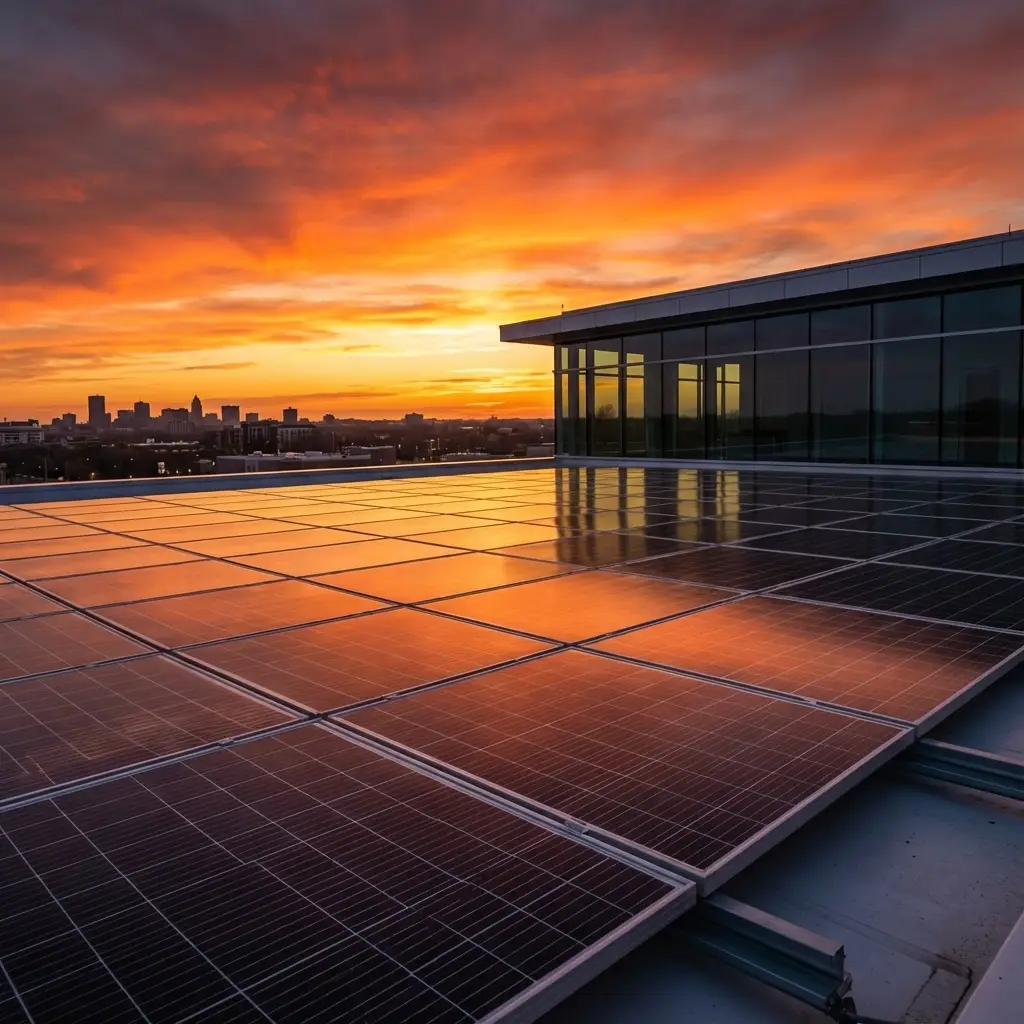
Commercial Solar Installation in Texas — Turnkey Projects for DFW Businesses (2026)
Reduce operating costs, increase sustainability, and enhance energy resilience with customized solar solutions for your business. Whether it’s rooftop solar, parking canopies, or battery storage, we design and install systems that maximize your energy savings and long-term value
Destined Energy LLC is a licensed Texas Electrical Contractor (TECL #38062, regulated by TDLR) that designs, engineers, and installs commercial solar projects across Dallas, Fort Worth, Plano, Frisco, McKinney, Arlington, Denton, Lewisville, Southlake, Keller, and Flower Mound. With more than 80 completed DFW projects, Tesla Powerwall certification, SPAN authorization, and Enphase certification, we help warehouses, manufacturing plants, hotels, healthcare facilities, office campuses, retail centers, and automotive dealerships capture the full 30% federal Section 48E Investment Tax Credit, MACRS accelerated depreciation, and Texas Tax Code §11.27 property-tax exemption — under the now-closed July 4, 2026 federal "begin construction" deadline. Projects beginning construction after that date must be placed in service by December 31, 2027 to qualify.
Advanced Commercial Solar Technologies
High-Efficiency Solar Panels
Maximize energy output with advanced photovoltaic modules designed for commercial rooftops, warehouses, and large-scale projects.
Solar Carports & Canopies
Convert parking spaces into dual-purpose energy generators, reducing heat buildup while providing shade for vehicles.
Battery Energy Storage
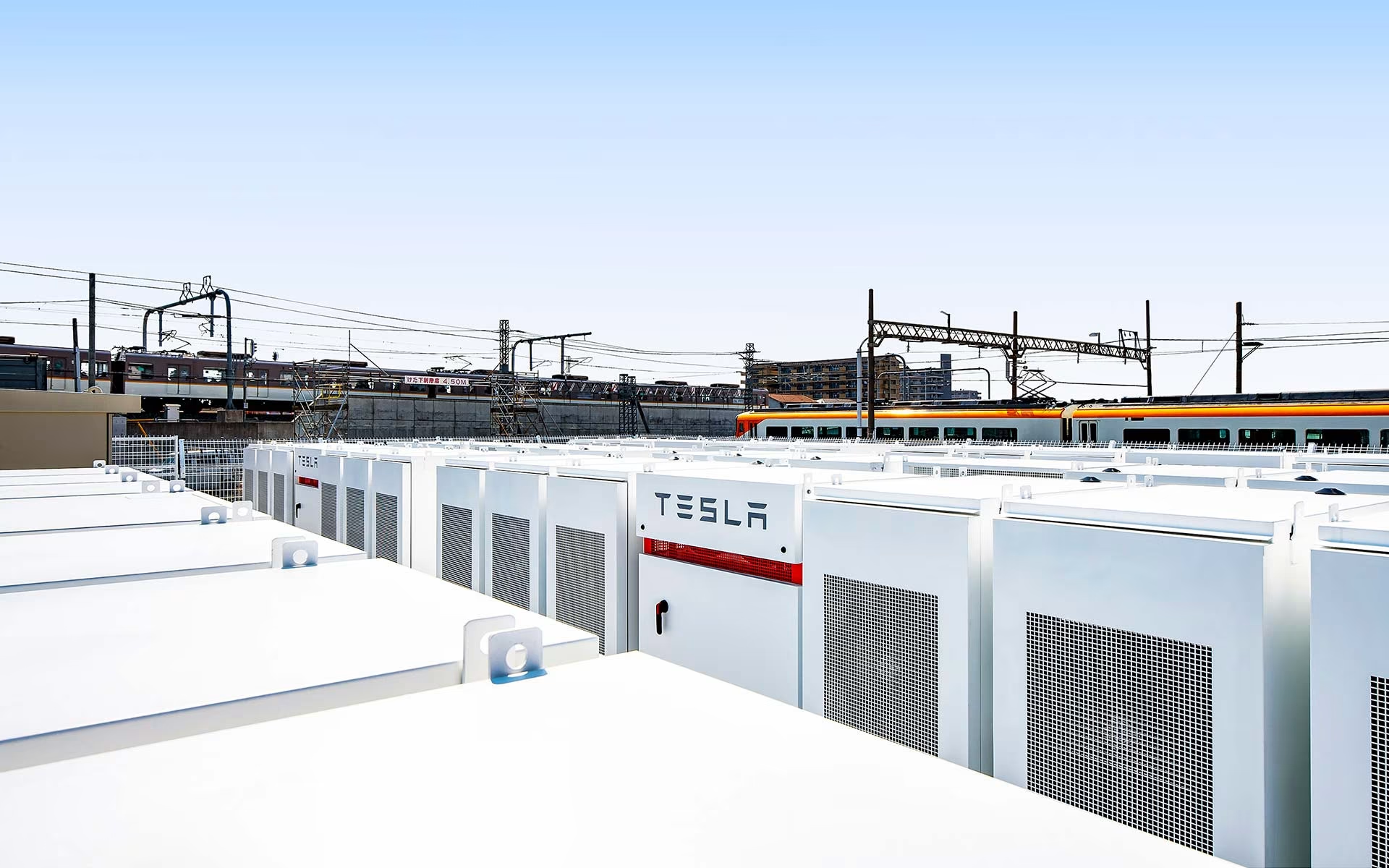
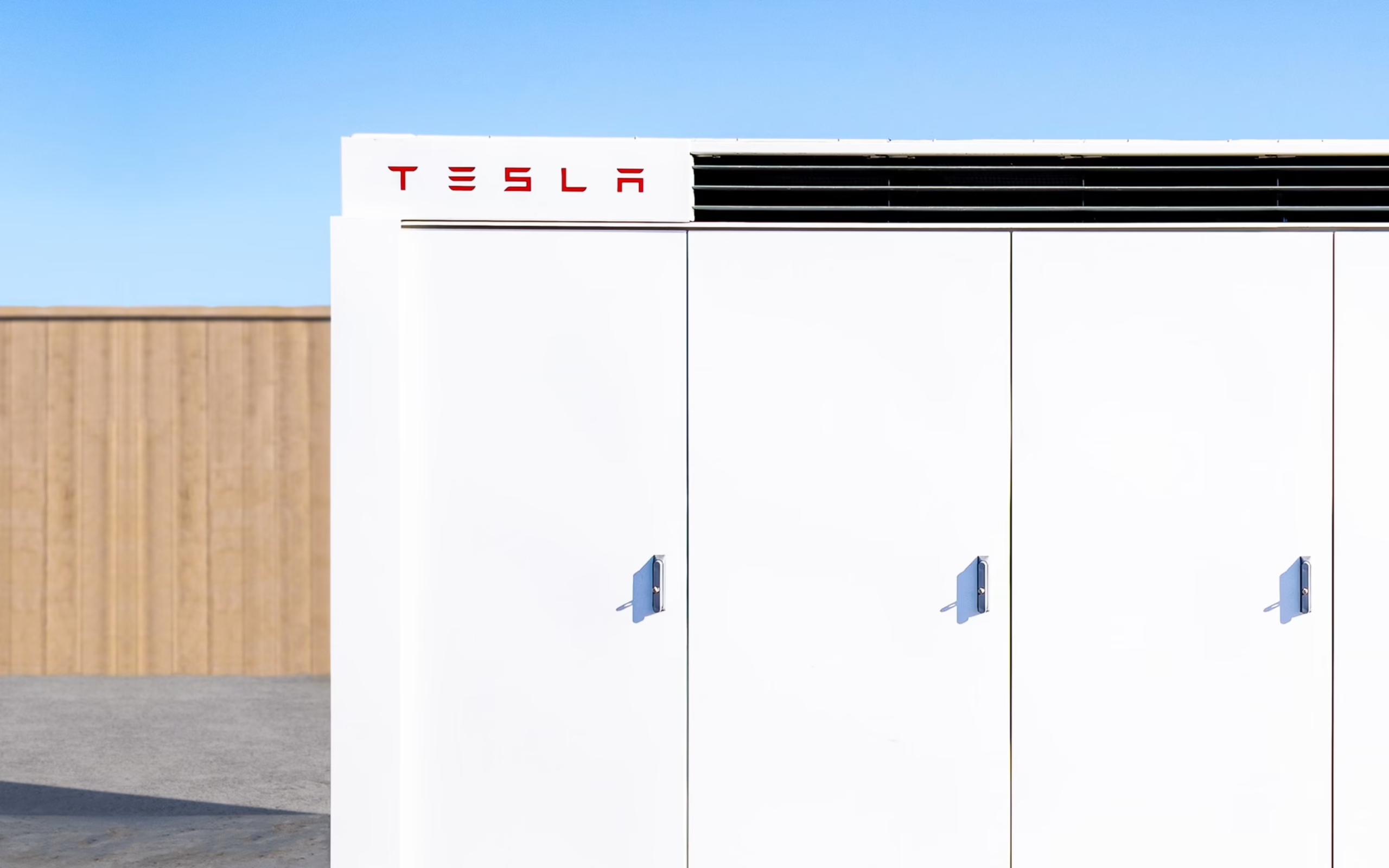
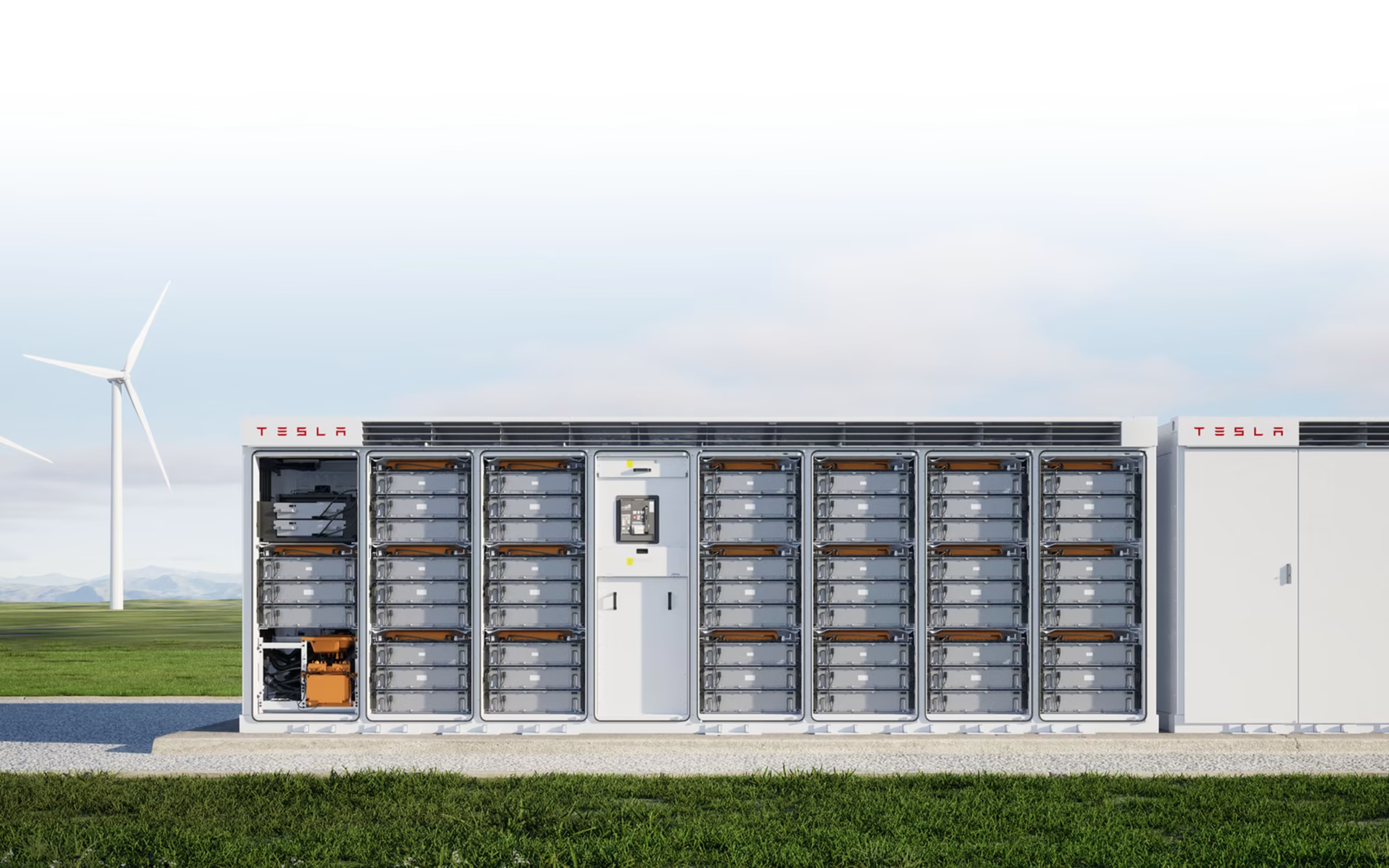
Enhance energy resilience and reduce peak demand charges with integrated solar + battery storage solutions.
Smart Energy Management
Leverage intelligent energy optimization software to track usage, manage demand, and reduce electricity waste.
How Your Business Benefits from Solar

Lower Operating Costs:
Save up to 50% on electricity bills with on-site solar generation and demand charge reduction

Tax Incentives & Rebates:
Take advantage of federal tax credits (30% ITC), accelerated depreciation (MACRS), and utility incentives to maximize savings.

Power Resilience & Backup:
Protect your business from rising energy costs and potential outages with solar and battery backup systems.
Sustainability & Compliance:
Reduce your carbon footprint, meet corporate sustainability goals, and earn LEED points if required.
Our Process – From Consultation to Installation
- Consultation & Site Assessment: Every business is unique. We evaluate your energy usage, roof or land space, and financial goals to create a tailored solar plan
- Custom System Design & Proposal: We use cutting-edge design tools to create a custom solar system that maximizes energy production and return on investment
- Permitting & Utility Approvals: Our team handles all permits, engineering, and interconnection approvals to ensure a smooth process.
- Installation & Commissioning: Our expert electricians and solar technicians install your system with minimal disruption to your operations
- Monitoring & Ongoing Support: Track energy production in real-time with our monitoring software. We provide long-term maintenance and support.

Making Commercial Solar Affordable
Federal Solar Tax Credit (ITC): Get 30% of your system cost back through the federal Investment Tax Credit (ITC).
Accelerated Depreciation (MACRS): Claim a large portion of your solar investment as a tax deduction through Modified Accelerated Cost Recovery System (MACRS).
Utility Rebates & Local Incentives: Certain states and utility companies offer rebates and incentives to further lower your upfront cost.
Commercial Solar for Every Industry
Destined Energy specializes in solar solutions for a variety of business sectors:

Office Buildings: Lower overhead costs with solar power.

Hotels & Hospitality : Offset high energy usage from HVAC and lighting.

Warehouses & Manufacturing: Reduce demand charges and stabilize energy costs.

Retail & Shopping Centers: Improve sustainability and attract eco-conscious customers.

Healthcare & Medical Facilities: Enhance power reliability with solar + storage.

Automotive Dealerships: Solar carports and rooftop systems for cost savings and sustainability.
Commercial Solar Installation Texas FAQs – What Business Owners Need to Know
How much can a Dallas business save with commercial solar?
A typical DFW commercial business can expect to save 50–80% on electricity over 25 years — these are estimated figures based on current rates and usage patterns. For example, a 500 kW warehouse system in Dallas running on an estimated Oncor blended rate of $0.105/kWh could see lifetime savings exceeding $2.6M, assuming a 3% annual rate escalation. Those are projections, not guarantees — actual savings depend on your specific load profile, rate class, and financing structure. That said, once you stack the 30% Section 48E ITC, 10% domestic-content bonus, MACRS depreciation, and the Texas §11.27 property-tax exemption, payback periods in the ballpark of 3–5 years are realistic for the right project.
What is the payback period for commercial solar panels in Texas?
Texas commercial solar payback in 2026 typically lands somewhere between 3 and 7 years — these are estimated ranges that depend heavily on system size, tax structure, and how your business uses electricity. Here’s a rough breakdown: mid-size warehouse and manufacturing systems in the 250–1,000 kW range tend to pay back in approximately 3–5 years. Smaller office and retail systems in the 50–250 kW range are generally looking at closer to 5–7 years. At the larger end — ground-mount and carport systems above 1 MW — you can hit an estimated 3-year payback when domestic-content and energy-community bonuses stack on top of MACRS bonus depreciation. Every project is different, so we always run the actual numbers for your specific building before quoting anything.
Is battery storage worth it for DFW commercial buildings?
Yes — and for three solid reasons. First, DFW averages roughly 48 grid-outage hours per year. For a manufacturing plant or healthcare facility, the lost productivity from even a single unplanned outage can easily cost more than the battery system itself. Second, battery dispatch during ERCOT 4CP windows (peak hours across June, July, August, and September) can punch a serious hole in the transmission demand charges that make up 30–70% of a typical commercial bill. Third, and this is the piece most people overlook — batteries independently qualify for the 30% Section 48E ITC under IRC §48E(c)(2), so you’re capturing the same federal credit whether the battery is paired with solar or installed standalone.
How does the 30% federal solar tax credit work for businesses in 2026?
Under Section 48E of the Internal Revenue Code, businesses get a base 30% federal Investment Tax Credit on the total commercial solar project cost — provided the project meets prevailing-wage and apprenticeship requirements. On top of that base, you can stack: +10% domestic content, +10% energy community, and +10–20% low-income bonuses, potentially reaching up to 70% total credit. The credit is claimed on IRS Form 3468 and applied via Form 3800. The catch: projects that began construction on or before July 4, 2026 locked in the full credit, and projects starting now must be placed in service by December 31, 2027. Always confirm your specific situation with your CPA — Destined Energy provides the project documentation, but tax strategy is your advisor’s lane.
What size solar system does a Texas commercial building need?
System sizing is driven by three things: your building’s annual kWh consumption, available roof or land area, and your 4CP demand profile. As a rough planning guide, a 100 kW system needs approximately 6,000–8,000 sq ft of clear, unobstructed roof; a 1 MW system needs roughly 60,000–80,000 sq ft — these are approximate figures that vary based on panel wattage, tilt, and shading conditions. On the production side, every 1 kW of solar in DFW generates an estimated 1,500 kWh per year, based on NREL NSRDB data and Dallas’s 5.0 average peak sun hours per day. Destined Energy completes a free site-specific energy audit and 25-year production model before putting any proposal in front of you.
How can a Texas business reduce commercial peak demand charges with solar?
The strategy has three layers. First, solar generation during 12 noon–8 p.m. naturally offsets Oncor’s peak-window demand. Second, battery storage that discharges specifically during the four ERCOT 4CP intervals across June, July, August, and September directly cuts the transmission demand charges that drive so much of a commercial electric bill. Third, a SPAN Smart Panel adds intelligent load management — automatically curtailing non-critical circuits when your meter is approaching the demand threshold. A correctly engineered solar + storage + SPAN architecture can reduce 4CP demand by an estimated 60–90%, though actual results depend on your building’s load profile and operational schedule.
What are the commercial solar tax incentives — MACRS and ITC — for 2026?
The two federal workhorses are the Section 48E ITC (30% base, stackable to 70% with bonuses) and MACRS 5-year accelerated depreciation. Bonus depreciation is 100%, permanently restored by the OBBBA — it applies to qualified property acquired after January 19, 2025, which covers any project starting today. The old TCJA phase-down, which would have fallen to 20% in 2026, now applies only to property acquired on or before January 19, 2025. On the state side, Texas §11.27 exempts the added solar value from property tax. Tax-exempt organizations — nonprofits, municipalities, schools — can access the same credits through Direct Pay under IRC §6417 and receive cash equivalent to the credit directly from the IRS.
What is the average ROI for commercial solar in Texas?
Internal rates of return for DFW commercial solar in 2026 are estimated to typically run 18–28% post-tax, with payback periods in the 3–7 year range and 25-year net cash flow of approximately 4–7× the post-incentive system cost. These are estimates — manufacturing and warehouse installations tend to sit at the high end of that range because of larger system sizes and better demand-charge reduction potential, while office and retail installations generally land closer to the lower end. Destined Energy models the specific ROI for your building at no cost before you commit to anything.
How can commercial solar earn LEED points?
Under the USGBC’s LEED v4.1 BD+C and O+M rating systems, on-site renewable energy can contribute up to 5 points in the Energy & Atmosphere category through the Renewable Energy credit. Additional points are on the table through Heat Island Reduction (solar carports count here), Optimize Energy Performance, and Regional Priority credits. The practical takeaway for Texas commercial project teams: a correctly sized solar system can be the deciding factor that pushes a project from LEED Certified up to LEED Silver or Gold without major changes to the rest of the building design.
What is the difference between Section 48E and Section 25D?
Section 25D was the residential credit for homeowners who purchased their own system outright — it expired December 31, 2025 under the One Big Beautiful Bill Act (OBBBA). If you’re a homeowner who paid cash for solar after that date, there’s no longer a 30% credit available to you personally. Section 48E is the commercial Clean Electricity Investment Tax Credit, and it remains available, but the begin-construction deadline of July 4, 2026 has passed, so projects starting now must be placed in service by December 31, 2027. Section 48E applies to businesses, nonprofits (through Direct Pay), governments, and tribal entities. It does not apply to homeowners who own their residential systems — which is precisely why Destined Energy’s residential Solar Power Purchase Agreement model exists: it keeps the project on our books so we capture 48E and pass the savings to the homeowner through a lower kWh rate.
How does ERCOT interconnection work for DFW commercial solar?
For behind-the-meter commercial systems below 10 MW, ERCOT and Oncor (the TDU covering DFW) follow the Distributed Generation interconnection process under PUCT Substantive Rule §25.211. Destined Energy handles the full process: submitting the application, coordinating the technical review with Oncor, managing the bi-directional metering swap, and securing Permission to Operate (PTO). For DFW commercial projects, total interconnection time is estimated at 4–10 weeks depending on jurisdiction and system complexity — that’s an approximation, as Oncor’s review timelines can vary. Projects above 10 MW enter ERCOT’s full Generator Interconnection (GINR) process, which has a significantly longer and more complex timeline.
What warranties come with Destined Energy commercial solar projects?
Every Destined Energy commercial project comes backed by a full warranty stack: 25-year linear performance warranty on solar modules (Silfab, REC, or Qcells); 25-year product warranty on Enphase IQ8 microinverters; 10-year warranty on Tesla Powerwall 3 and commercial LFP batteries; 12-year Destined Energy workmanship warranty covering installation, racking, and roof penetrations; and a 5-year inverter warranty on string inverters, with paid extensions up to 25 years available. All warranties are backed by TECL #38062 and serviced by Destined Energy’s W-2 crews based out of Denton, TX — not subcontractors, not a call center.
Power your business with clean, cost-effective energy. Start your commercial solar project today!