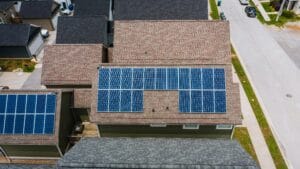

Texas Residential Solar PPA Guide (2026): Technical $0 Upfront Explanation
Texas residential solar PPA options are being evaluated by homeowners in 2026 as an alternative to purchasing solar systems outright. A residential Solar Power Purchase Agreement (PPA) can allow eligible homeowners to access solar electricity with $0 upfront system ownership cost, while paying for the energy produced at a contracted rate.
This guide explains how residential-only solar PPAs in Texas work, what contract terms matter most, and what to evaluate before signing. This content is educational and does not constitute legal, tax, or financial advice.
Compliance note: Solar PPAs discussed here are residential only. Commercial PPAs are not covered.
What is a Texas residential solar PPA?
A Texas residential solar Power Purchase Agreement (PPA) is a contract where a third party finances, installs, owns, and maintains a solar system on your home. The homeowner agrees to buy the electricity the system produces at a predetermined rate for a defined term, commonly 15–25 years.
- No system ownership by the homeowner
- No upfront equipment purchase
- System monitoring and maintenance handled per contract
- You pay for the electricity generated under the agreement
Why residential solar PPAs are considered in Texas (2026)
Texas homeowners evaluate solar decisions against electricity rate volatility, ERCOT-related grid events, and financing conditions. A PPA may reduce upfront cost barriers and shift certain performance and maintenance responsibilities to the system owner, while providing contract-defined pricing.
Important: A PPA is not the same as ownership. That tradeoff (lower upfront cost vs. not owning the equipment) is the core decision point.
External references (Texas grid and incentives)
For background on Texas grid operations, see the Electric Reliability Council of Texas (ERCOT).
For official information on the residential federal credit, see the IRS Section 25D residential clean energy credit.
Key benefits of a residential solar PPA in Texas
$0 upfront structure
PPAs remove the need for a large initial investment, which can be appealing to homeowners who prefer not to purchase or finance solar equipment.
Simplified responsibility
The system owner typically manages monitoring and maintenance, reducing long-term operational responsibility for the homeowner. Coverage details should be verified in the agreement.
Predictable pricing mechanics
PPA rates are often fixed or include a defined annual escalator, offering clearer long-term pricing mechanics compared to variable retail electricity rates.
Important contract terms to review
Not all PPAs are structured the same. Before signing, Texas homeowners should confirm these items in writing:
- Rate type: fixed rate vs. annual escalator (and the exact escalator percentage if used)
- Term length: contract duration and early termination terms
- Home sale: transfer process, buyer qualification requirements, and any fees
- RECs: who owns Renewable Energy Credits (RECs), and whether they can be purchased or transferred
- Roof responsibilities: roof penetration responsibility, repair process, and documentation
- Buyout option: if a purchase option exists, when it becomes available and how it’s calculated
- Insurance / warranties: what is covered, what is excluded, and how claims are handled
For a deeper explanation of escalators and how they affect costs over time, see: Solar PPA annual escalators explained in Texas (2026).
Who is a good fit for a Texas residential solar PPA (2026)?
- You are a single-family homeowner in Texas (PPAs are residential only).
- You prefer a lower upfront cost structure over equipment ownership.
- You want monitoring and maintenance responsibilities handled by the system owner (per contract).
- You plan to stay in the home long enough to benefit from the contracted rate structure.
What to review before signing a residential solar PPA
- Contract rate: fixed vs. escalator and the exact annual percentage.
- Production and billing: how kWh is measured and billed, and what happens if usage changes.
- Home sale terms: transfer steps, approval requirements, and buyout conditions.
- Roof responsibility: documentation for penetrations and the repair process.
- RECs: who owns them and whether that matters to you.
Reminder: This article is educational and does not provide legal or tax advice. Always review contracts carefully and ask for terms in writing.
Are residential solar PPAs worth it in Texas in 2026?
A residential solar PPA may be a good fit for homeowners who prioritize low upfront cost, simplified responsibility, and predictable pricing mechanics. It may not be ideal for homeowners who want maximum long-term ownership value or full control over equipment decisions.
A personalized evaluation should compare your bill history, site conditions, utility structure, and contract terms. Avoid relying on generalized savings statements or assumptions that do not match your household usage.
FAQs: Texas residential solar PPA (2026)
Is a residential solar PPA only for homeowners?
Yes. Residential solar PPAs are designed for eligible single-family homeowners. This structure is residential only and is not used for commercial properties in this context.
Is $0 upfront the same as free solar?
No. “$0 upfront” means there is typically no initial equipment purchase cost at installation. Under a PPA, you still pay for the electricity the system produces at a contracted rate.
Are savings guaranteed?
No. Outcomes depend on your household usage, utility pricing, system production, and contract terms. A PPA provides contract-defined pricing, not guaranteed savings.
What happens if I sell my home?
Most PPAs include a transfer process or a buyout option, subject to contract terms and approvals. Review transfer requirements, timelines, and any fees before signing.
Who owns the RECs in a Texas residential solar PPA?
REC ownership depends on the agreement. In many cases, the system owner retains RECs, but homeowners should confirm REC ownership terms in writing.
Does the PPA rate increase over time?
It depends on the contract. Some PPAs are fixed-rate, while others include a defined annual escalator. Confirm the exact structure and compare it against realistic electricity rate assumptions.
Next steps
If you are evaluating a residential solar PPA, the next step should be a technical, data-driven assessment—not a high-pressure sales pitch.
Request a residential solar PPA assessment
Destined Energy
8126 E McKinney St Suite D2, Denton, TX 76208, United States
+1 (469) 277-9628 · info@destinednrg.com