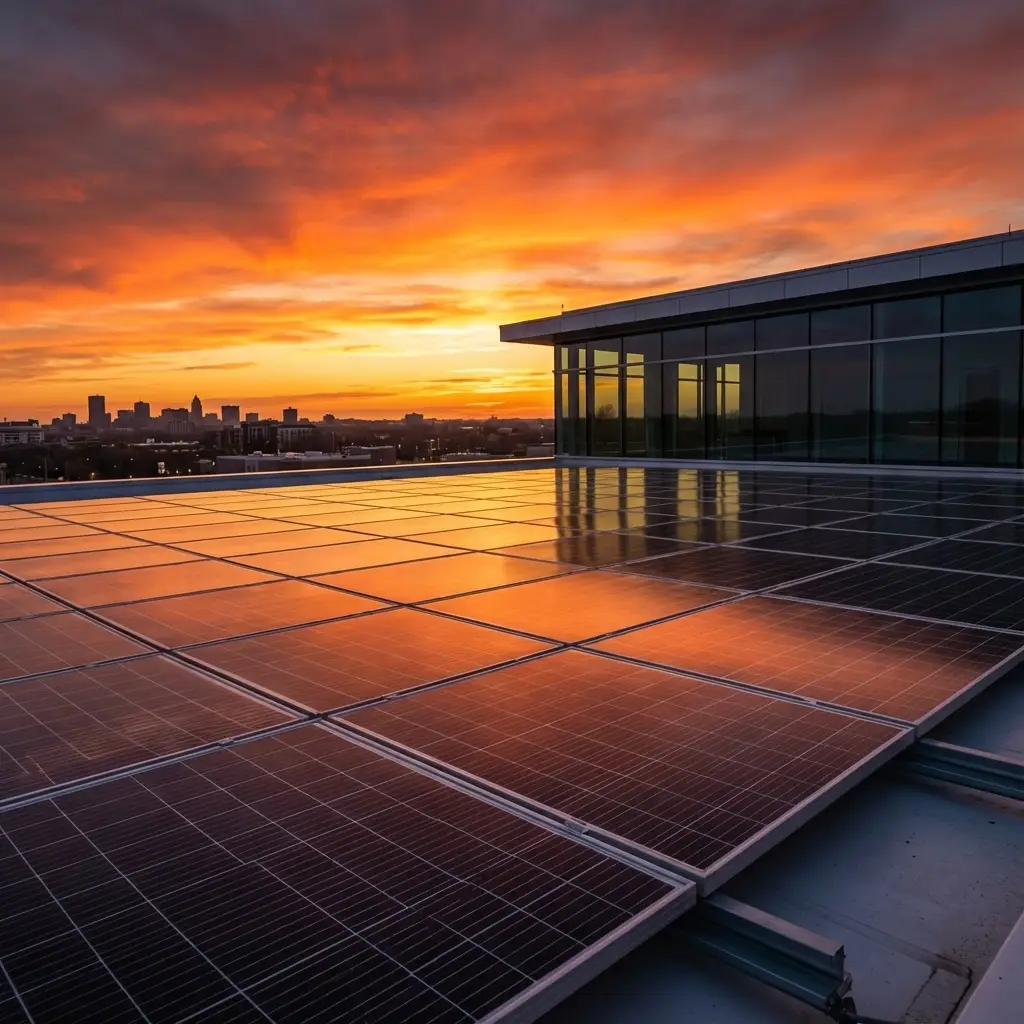
The Final Safe Harbor
Commercial Solar | Dallas–Fort Worth (DFW)
The Final Safe Harbor: Why December 31 Is the Pivot Point for DFW Commercial Assets
For DFW commercial owners and facility managers, year-end isn’t just a deadline—it’s a financial pivot. Here’s how the 5% Safe Harbor rule under Section 48E can protect project economics without rushing construction.
Commercial solar is not governed by the same rules as residential solar. For many DFW commercial assets, the end of the year is a strategic opportunity: under Section 48E, eligible projects may preserve the 30% federal tax credit by meeting the 5% Safe Harbor requirements before December 31—even if construction occurs in 2026–2027.
| Topic | What DFW asset owners should know | Why it matters |
|---|---|---|
| Residential vs Commercial | Residential (25D) typically requires operation by year-end; Commercial (48E) may use Safe Harbor | Wrong assumption can cost major incentives |
| 5% Safe Harbor | Documented incurred cost ≥ 5% before Dec 31 can preserve tax-year credit (project-specific) | Locks in economics without rushed construction |
| DFW grid reality | ERCOT volatility and rising delivery costs make resilience a financial variable | Solar + BESS supports continuity & demand strategy |
| Execution risk | Commercial work requires NEC-informed engineering + utility coordination | Licensing & in-house control reduce delays |
Commercial Solar Isn’t Residential Solar: The Distinction That Changes Everything
A costly year-end mistake is applying residential rules to commercial projects. In practice, commercial assets often have additional timing flexibility when structured correctly—especially when procurement, accounting documentation, and compliance are handled deliberately.
Residential (Section 25D) vs Commercial (Section 48E)
- Residential (25D): homeowners generally need systems fully installed and operational by year-end to claim the credit.
- Commercial (48E): eligible commercial entities may preserve the credit for the tax year through Safe Harbor structure (project-specific).
The Safe Harbor Advantage (Section 48E): How the 5% Rule Works
The practical concept is simple: if you meet the Safe Harbor requirements in the current tax year, you may be able to preserve the credit rate without forcing construction to finish before December 31. For many DFW commercial owners, that means executing a controlled procurement and documentation plan now, then building later under a realistic schedule.
What “incurred” needs to look like in the real world
- Binding agreements that align scope, equipment, and delivery timelines.
- Equipment allocation/procurement for qualifying components (often inverters, switchgear, storage).
- Verifiable documentation showing payment meeting or exceeding the Safe Harbor threshold.
The strategy is not “buy anything quickly.” It’s procuring the correct equipment under the correct terms, documenting it correctly, and aligning it with engineering and permitting so the project remains buildable.
Why This Matters in DFW: ERCOT Volatility Is an Operational Variable
For Dallas–Fort Worth commercial facilities, grid risk affects operations, tenant satisfaction, and long-term asset positioning. When transmission and distribution costs rise and interconnection pipelines tighten, “wait and see” becomes a budget strategy with consequences.
BESS is no longer optional for many facility profiles
In 2025–2026, Battery Energy Storage Systems (BESS) are increasingly deployed for:
- Operational continuity: keeping critical loads running during grid events.
- Peak management: reducing exposure to peak-related cost drivers (tariff-dependent).
- Resilience planning: preparing for weather-driven reliability risks.
Related reading: Battery Storage
The Technical Gap: Why Licensing and In-House Control Matter
Commercial solar and storage isn’t simply “more panels.” It includes load and protection planning, code compliance, interconnection coordination, and high-consequence electrical integration. When a project is sold by a non-technical network and engineered later by third parties, year-end timelines can break—fast.
Commercial execution requires real electrical engineering discipline
- Complex load calculations and system design constraints
- Utility coordination and interconnection requirements
- Site-specific safety and compliance documentation
Destined Energy is led by a TDLR Licensed Master Electrician. We prioritize code-compliant engineering and do not outsource critical permitting or design dependencies that typically create delays during a compressed year-end window.
The Year-End Protocol: What Must Happen Before December 31
To pursue the Safe Harbor approach, projects typically need two non-negotiables before year-end: procurement structure and documentation structure. If either is missing, compliance becomes harder to defend.
1) Equipment allocation under binding terms
- Binding contracts covering qualifying equipment (commonly inverters and/or storage)
- Clear scope alignment between procurement and engineering intent
2) Financial verification with an audit-ready trail
- Documented payment meeting or exceeding the Safe Harbor threshold
- Accounting evidence prepared for review
Why “Wait and See” Can Be the Most Expensive Strategy for Commercial Assets
Commercial owners often delay to see how rates or equipment pricing evolves. But for assets with large loads, missing a tax-year credit rate can permanently change the project’s financial profile.
- Reduced incentive value can shrink ROI and extend payback
- Budget cycles may shift against capital availability
- Resilience exposure remains unmanaged
FAQs: Section 48E Safe Harbor for DFW Commercial Solar
Is Safe Harbor the same for every commercial project?
No. Eligibility and documentation depend on ownership structure, contract language, accounting method, and the facts of your project. Confirm with your CPA/tax counsel.
Do we have to complete installation by December 31?
Commercial projects often focus on year-end incurred cost and documentation (Safe Harbor approach), not full operation by Dec 31. Details vary—verify for your specific project.
What equipment is most commonly allocated before year-end?
Projects often prioritize qualifying long-lead equipment such as inverters, switchgear, and battery systems—aligned with a buildable engineering plan.
How do batteries improve commercial outcomes in DFW?
Storage can support continuity and peak-management strategies (tariff- and load-dependent), helping facilities reduce operational risk tied to grid events.
Next Step: Commercial Infrastructure Assessment (DFW)
If you manage a DFW facility and want a Safe Harbor-ready plan, start with a technical assessment: load profile review, preliminary system sizing, and a documentation roadmap.
Request a Commercial Assessment
We’ll evaluate feasibility, timeline constraints, and whether a solar + storage strategy fits your facility profile in DFW.
Or call +1 (469) 277-9628
About Destined Energy
Destined Energy is a Texas-based solar and electrical contractor serving the Dallas–Fort Worth Metroplex and North Texas with commercial solar, battery storage, EV charging, and smart electrical solutions. Our operations are led by a TDLR Licensed Master Electrician, and we prioritize code-compliant engineering and permitting control to reduce timeline risk.
Certifications and technology expertise include: Tesla, Span, Franklin, Enphase, and REC (project fit dependent).
Company Profile
Company: Destined Energy
Service area: Dallas–Fort Worth (DFW), Dallas, Fort Worth, Denton, TX
Core services: Residential solar, commercial solar, EV charging, battery options, solar PPAs
Contact: (469) 277-9628 • info@destinednrg.com
2025 Guide: Residential Solar PPA in Dallas–DFW | $0 Upfront
How to Choose a Residential Solar PPA Installer in Dallas–DFW (2025 Guide)